 Skip to content

What Is Ransomware Protection?
Ransomware protection includes strategies, tools, and methodologies to prevent, detect, respond to, and recover from ransomware attacks. Ransomware is a type of malicious software that encrypts files and demands payment for a decryption key, disrupting operations and causing financial and reputational damage.
Effective protection requires a proactive and layered security approach involving endpoint defense, backups, encryption, and real-time monitoring tools. Enterprises adopt ransomware protection to protect critical assets, reduce downtime, and mitigate financial risks. These solutions deploy anti-virus programs, firewalls, anomaly detection systems, and automated backup procedures.
Additionally, protection strategies focus on both prevention and rapid recovery to ensure business continuity. Integrating cybersecurity training for employees further reinforces defenses by reducing the risk of user-targeted attacks, such as phishing.
Editor’s note: Updated the article to cover recent market trends, updated information about ransomware protection solutions to reflect features, capabilities, and limitations in 2026.
In this article:
- Key Features of Ransomware Protection for Enterprise
- Solution Focus: Disaster Recovery vs Detection and Response
- Ransomware Protection Solutions Focused on Disaster Recovery
- Ransomware Protection Solutions Focused on Detection and Response
- Frequently Asked Questions
Ransomware Protection Market Trends
According to recent market research, the ransomware protection market is expanding rapidly, driven by increasing attack frequency and higher financial impact. It is valued at USD 25.86 billion and is projected to grow to USD 63.56 billion by 2031, with a CAGR of 16.18%.
Several factors are accelerating market demand. The rise of ransomware-as-a-service (RaaS) lowers the barrier for attackers, increasing the number of incidents. At the same time, triple-extortion tactics and expanding attack surfaces in cloud and operational technology environments create more risk.
Organizations are also responding to stricter cyber-insurance requirements and regulatory pressures. These forces push companies to adopt stronger controls such as multi-factor authentication, segmentation, and immutable backups.
Cloud adoption and deployment trends
On-premises solutions still dominate, accounting for 67.95% of the market in 2025, mainly due to compliance and data control requirements. However, cloud-based solutions are growing faster, with a projected CAGR of 17.55% through 2031.
Hybrid models are becoming common. These combine on-premises data collection with cloud-based analytics, allowing organizations to scale detection and response without losing control over sensitive data.
Leading protection models
Endpoint protection remains the largest segment, contributing 43.65% of revenue in 2025. However, backup and recovery solutions are growing faster, reflecting increased focus on recovery when prevention fails.
Immutable and air-gapped backups are gaining importance as a last line of defense. At the same time, technologies like behavioral analytics and anomaly detection are becoming standard to identify threats earlier.
Key Features of Ransomware Protection for Enterprise
Effective ransomware protection for enterprises relies on a combination of technologies and practices that form a multi-layered defense. Each layer addresses different stages of a potential attack—from preventing initial access to ensuring rapid recovery.
Some enterprise ransomware protection solutions focus on disaster recovery and provide features like:
- Automated and immutable backups: Maintains up-to-date backups that are resistant to tampering or deletion by ransomware, allowing quick restoration of data without paying a ransom.
- Cross-account backups: Backups are stored in isolated accounts—separate from the production environment—with tightly scoped IAM roles and policies. For example, AWS workloads can back up to an entirely separate AWS account with restrictive access, preventing attackers from accessing or deleting backup data even if they breach the primary account.
- Cross-cloud backups: Critical backup data is replicated to a different cloud provider (e.g., AWS workloads backed up to Azure or Wasabi). This separation offers an additional layer of resilience. If one cloud environment is compromised—due to credential theft or provider outage—the secondary cloud remains isolated and secure.
Other solutions focus on detection and response for ransomware incidents, and provide features like:
- Advanced threat detection and prevention: Uses behavioral analysis, machine learning, and signature-based detection to identify known and unknown ransomware strains before they can execute.
- Real-time endpoint monitoring: Continuously monitors endpoints for suspicious activity, such as unauthorized encryption processes or file modifications, and can automatically isolate affected systems.
- Network segmentation and access control: Limits lateral movement within the network by segmenting systems and enforcing strict access policies, reducing the attack surface and containing breaches.
- Email and web gateway protection: Filters malicious attachments, links, and phishing attempts at the entry points most commonly used by ransomware to gain access to networks.
- Application allowlisting: Allows only approved applications to run, blocking unauthorized software—including ransomware—from executing on protected systems.
- Patch and vulnerability management: Regularly scans and updates software and operating systems to close security gaps that ransomware may exploit.
Solution Focus: Disaster Recovery vs Detection and Response
Enterprise ransomware protection solutions typically fall into two broad categories: disaster recovery and detection and response. Both are essential for a complete security posture but serve different objectives within the ransomware defense lifecycle.
Disaster Recovery-Focused Solutions
Solutions in this category are designed to help organizations recover quickly from ransomware attacks without paying the ransom. They emphasize resilience through robust backup architectures and recovery automation. Key traits include:
- Immutable backups that cannot be modified or deleted, even by privileged users or malware
- Granular recovery options to restore individual files or full environments
- Cross-account and cross-cloud storage to isolate backup copies from compromised production systems
- Orchestrated failover to restore critical services in the right order
- Support for compliance with data retention, audit, and sovereignty requirements
These tools are best suited for organizations that need fast, auditable recovery and have complex infrastructure across cloud or hybrid environments. Examples: N2W, Rubrik, Cohesity
Detection and Response-Focused Solutions
This category includes tools that detect ransomware activity early and enable fast containment, investigation, and remediation. They focus on threat visibility, endpoint protection, and automated response. Common features include:
- Real-time monitoring for file encryption, lateral movement, and command-and-control activity
- Behavioral and AI-based threat detection to identify both known and unknown ransomware
- Rollback and isolation capabilities to stop attacks in progress and restore data
- Threat hunting and forensic tools to investigate root cause and prevent recurrence
- Integration with SIEM, SOAR, and EDR/XDR platforms
Detection and response tools are critical for reducing dwell time, limiting the blast radius of an attack, and providing insights into attacker techniques. Examples: CrowdStrike Falcon, CyberProof, Sophos Endpoint
Choosing the Right Focus
Understanding your organization’s recovery time objectives (RTOs), threat exposure, and operational complexity will help determine the right balance between prevention and recovery:
- Recovery-first approach: Best for organizations with critical uptime requirements, large volumes of sensitive data, and mature backup strategies.
- Detection-first approach: Suited for security-driven teams looking to actively monitor, investigate, and neutralize ransomware threats in real time.
Combined approach: Most enterprises benefit from combining both types—pairing endpoint protection and threat detection with immutable backups and automated recovery workflows.
Ransomware Protection Solutions Focused on Disaster Recovery
Head to Head Comparison
| Product | Description | Pros | Cons |
| N2W | Backup and disaster recovery solution for AWS and Azure with a focus on ransomware resilience, immutability, and isolated recovery. | Fast workload and file recovery; cross-account and cross-cloud backups; strong immutability across short- and long-term storage; zero trust security model; granular file recovery; automated DR testing; reduced attack surface via isolated architecture; compliance support | Snapshot-based protection (not continuous block-level replication) Primarily focused on IaaS workloads Does not include built-in endpoint malware detection engine |
| Rubrik | Unified ransomware protection platform combining backup, threat analytics, and recovery across cloud, SaaS, and on-prem environments. | Immutable and air-gapped backups; integrated threat analytics; identity protection and recovery; broad environment coverage; fast recovery to clean state | High cost; complex licensing; limited reporting customization; learning curve for setup and policies; limited flexibility in advanced features |
| Cohesity | Data security and management platform that consolidates backup, protection, and analytics for large-scale environments. | Unified platform for data protection and management; scalable architecture; integrated security controls; centralized visibility and insights | Limited reporting capabilities; slow or inefficient restore processes; pricing concerns; less intuitive UI; weak legacy system support; slow feature rollouts |
| CrowdStrike Falcon | Cloud-native security platform providing AI-driven ransomware detection and response across endpoints, identity, cloud, and SaaS. | AI-based threat detection; unified platform; real-time threat intelligence; lightweight agent; automated response workflows | Expensive pricing; steep learning curve; complex interface; potential false positives; time-consuming onboarding and integration |
| CyberProof Ransomware Protection | Managed ransomware protection service combining monitoring, detection, incident response, and recovery support. | Fully managed service; integrated incident response; proactive threat detection; supports backup and continuity planning; compliance alignment | High cost; limited visibility into internal processes; inconsistent reporting depth; complex onboarding; reduced control over tooling |
| Sophos Endpoint | Endpoint protection platform using AI, behavioral analysis, and automated response to prevent and mitigate ransomware attacks. | Behavior-based detection; automatic file rollback; remote ransomware protection; integrated EDR/XDR; centralized cloud management | Performance impact on systems; high resource usage; steep learning curve; complex setup; high CPU usage on older devices |
1. N2W

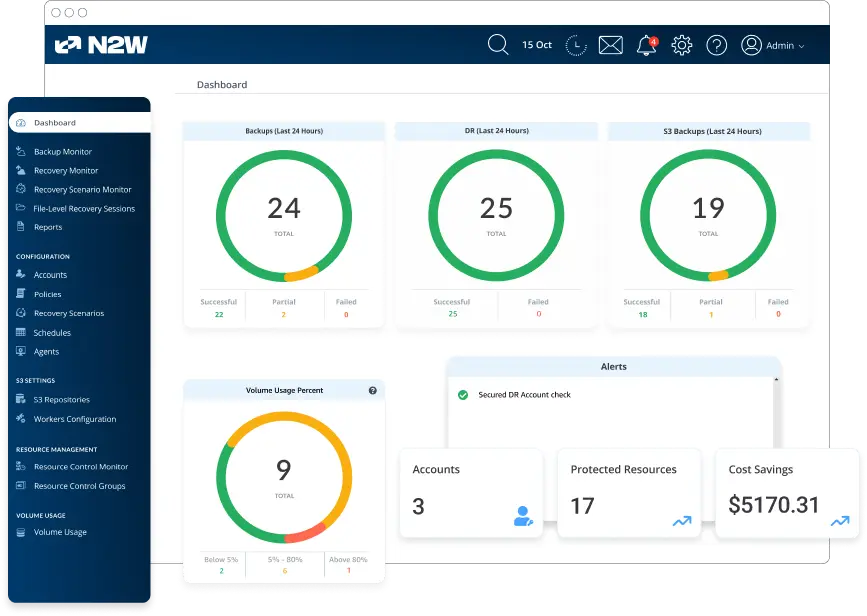
N2W provides a ransomware-resilient backup and disaster recovery solution built for AWS and Azure environments. It offers immutable backups, isolated recovery environments, and granular restoration features to help organizations recover quickly from cyber incidents.
Pros:
- Instant recovery of workloads and files: Enables restoration of entire environments, volumes, or individual files in seconds, minimizing downtime and avoiding data loss.
- Cross-account and cross-cloud backups: Supports storing backup copies in separate AWS or Azure accounts—or even in a different cloud provider—helping ensure recovery options are isolated from the primary environment.
- Immutability for both short- and long-term backups: Short-term recovery points are stored using immutable EBS snapshots, while long-term retention is handled via S3 Glacier, Azure Blob, or Wasabi with object lock.
- Zero trust architecture: Uses multi-factor authentication (MFA), role-based access controls (RBAC), and quorum-based approval to secure access and enforce least-privilege operations.
- Recovery scenario orchestration: Supports defining failover groups in advance, allowing admins to control the order in which resources are restored. This ensures critical dependencies (like DNS, databases, or networking components) are prioritized.
- Granular file-level recovery: Allows restoration of specific files or folders without needing to recover the entire volume.
- Automated DR testing: Enables scheduled disaster recovery tests in isolated environments with support for restoring network settings. Results can be exported for compliance verification.
- Reduced attack surface via customer-account deployment and isolated DR architecture.
- Regulatory and compliance support: Provides detailed audit logs, retention policies, and data sovereignty controls to help meet GDPR, HIPAA, and ISO 27001 requirements.
Cons:
- Snapshot-based protection (not continuous block-level replication)
- Primarily focused on IaaS workloads
- Does not include built-in endpoint malware detection engine
Related content: read our guide to ransomware protection services
2. Rubrik

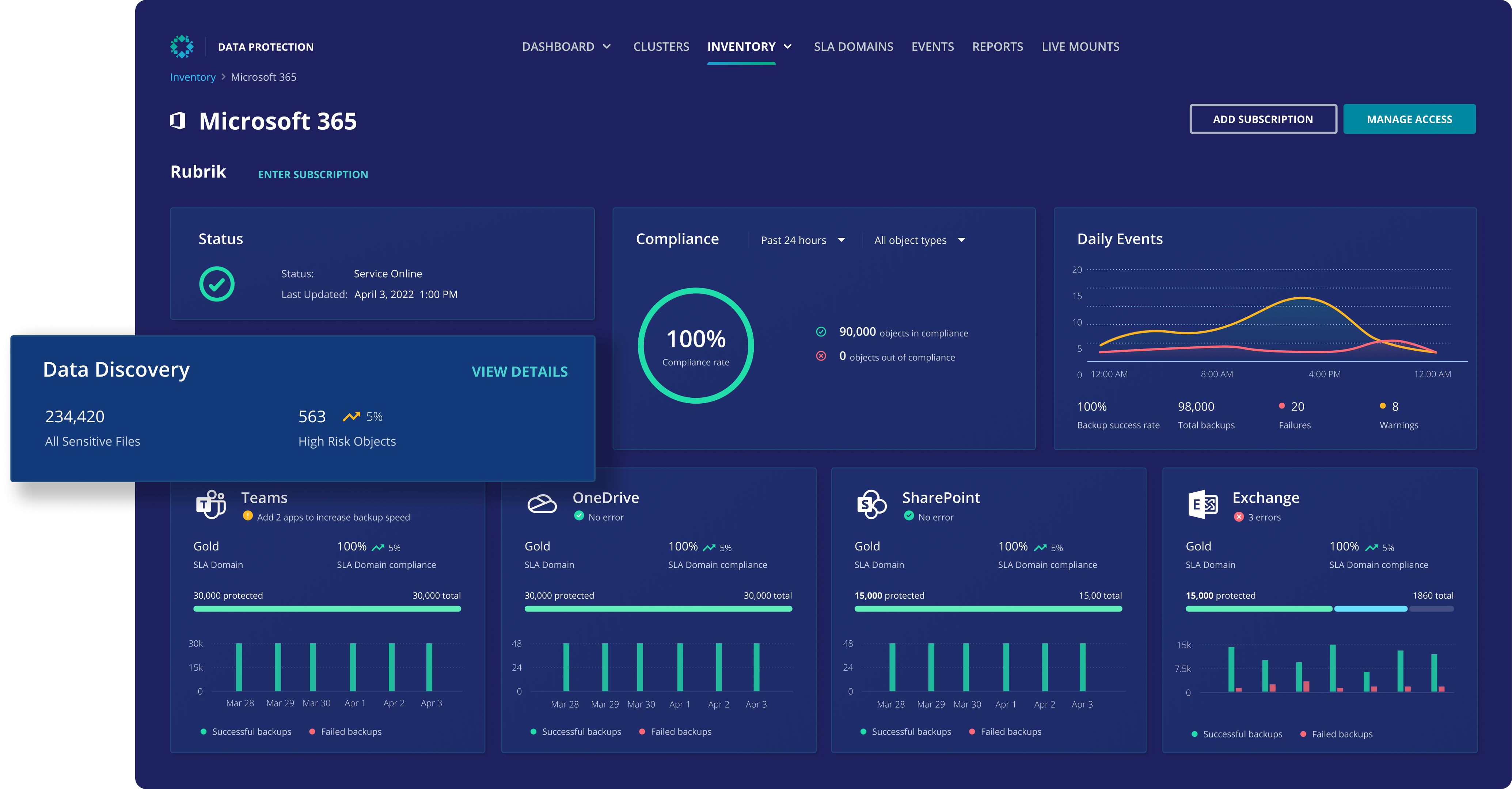
Rubrik is a data security platform that offers immutable backups, helping prevent attackers from encrypting or deleting backup data. After an attack, it helps identify scope, including whether sensitive data such as PII or PHI may have been exposed. The platform combines backup protection with security analytics, recovery orchestration, and integrations with existing security tooling.
Key features include:
- Immutable backup storage: All data is stored in an immutable format, with multi-factor authentication, zero-trust cluster design, and retention lock support preventing modification or deletion during an attack.
- ML-powered anomaly detection: Algorithms trained on known ransomware behaviors analyze encryption methods, registry changes, and file modification patterns to identify the ransomware strain and support a targeted response.
- Sensitive data discovery: Rubrik identifies which sensitive data may have been exposed during an attack, helping prioritize recovery and determine whether notification obligations apply.
- ML-assisted clean recovery point identification: Machine learning analyzes snapshots for anomalous behavior and suggests the most recent clean recovery point, removing the need to identify uncompromised backups manually.
- Mass and orchestrated recovery: Guided workflows support file-, object-, application-, and system-level recovery, including simultaneous restoration of hundreds of VMs using pre-defined recovery blueprints.
- SIEM and SOAR integration: Rubrik connects with popular SIEM, SOAR, and security automation frameworks via API, enabling automated recovery workflows and enriched incident intelligence.
Cons (as reported by users on G2):
- High cost for smaller organizations: Users frequently mention that pricing is expensive, particularly for small and mid-sized businesses or growing environments.
- Complex licensing and cost management: The licensing model can be difficult to understand, with costs increasing as data scales or additional features are required.
- Limited reporting and customization: Built-in reporting and analytics lack flexibility, often requiring APIs or external tools for deeper insights.
- Learning curve for advanced configuration: Initial setup, policy configuration, and working with SLA domains can require time and technical expertise.
- Limited flexibility in advanced features: Some users note that policy-driven design and feature limitations reduce customization options in certain use cases.
3. Cohesity

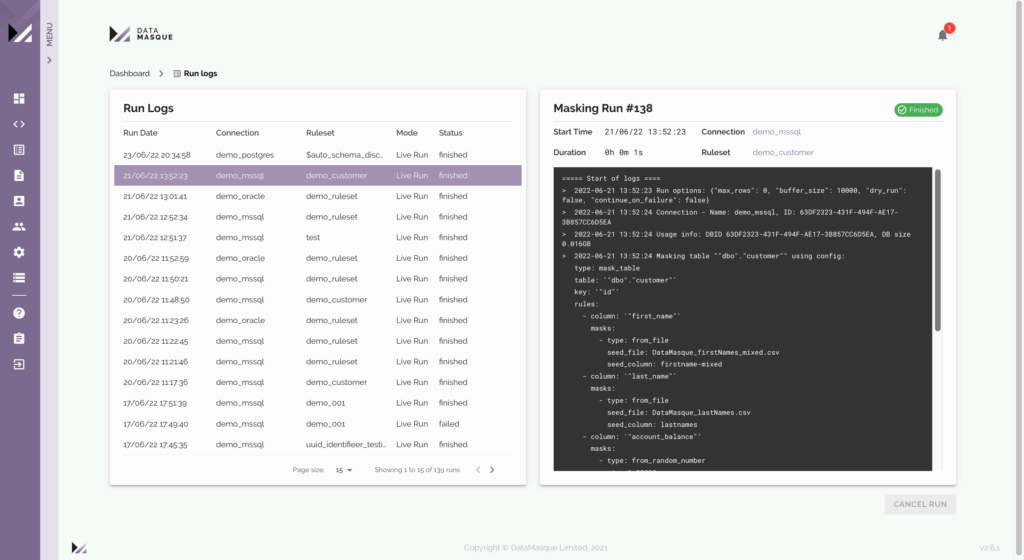
Cohesity takes a layered approach to ransomware defense spanning immutable backup storage, AI-powered anomaly detection, cyber vaulting, and rapid recovery across on-premises, cloud, and SaaS environments. For worst-case scenarios, FortKnox provides a SaaS-based cyber vault that isolates backup data behind a virtual air gap, with integrated threat scanning to assess recovery-point risk before restoration.
Key features include:
- Immutable snapshots and DataLock (WORM): Cohesity snapshots are designed for immutability, and DataLock adds WORM protection that prevents deletion or modification during the lock period.
- FortKnox cyber vaulting: FortKnox isolates backup copies using a virtual air gap with ransomware detection, zero-trust controls, and quorum-based authentication to protect against both external and insider threats.
- AI-powered anomaly detection and threat hunting: AI detects unusual data patterns and user activity, while threat scanning and data classification tools support investigation and impact assessment on sensitive data.
- CyberScan for pre-restore validation: CyberScan provides a snapshot-level vulnerability index and recommendations, allowing teams to verify a recovery point before restoring it to production to reduce reinfection risk.
- Instant recovery at scale: Fully hydrated snapshots support instant recovery of hundreds of VMs, databases, and NAS data to any point in time and location.
- Zero-trust access controls: Granular RBAC, MFA, and quorum-based approval for sensitive operations prevent any single administrator from unilaterally issuing privileged commands.
Cons:
- Reporting limitations: Many users have noted that the reporting capabilities are basic and lack customization options. Reports often do not provide granular insights or detailed metrics about data protection activities, which limits their usefulness for large enterprise environments. Additionally, generating advanced reports often requires support tickets or leveraging APIs, which may not be ideal for all users.
- Inefficient restore process: Several users have experienced delays during file-level restores, with even small files taking hours to recover. This inefficiency could lead to operational disruptions, especially during critical recovery scenarios. Some users have also reported challenges with restoring SQL databases or instances due to the lack of batch recovery options.
- Cost and licensing concerns: Some users believe the pricing could be more competitive. Certain features, such as advanced cyber resilience tools, are limited or require additional costs, reducing affordability for smaller organizations.
- Interface and usability issues: The user interface, while functional, is not as intuitive or user-friendly as competitors’ platforms. Navigation can feel clunky, and certain tasks require additional steps or workarounds. Users also mentioned that search functionality, such as locating backups, could be more precise and efficient.
- Support for legacy systems: Organizations with older systems have reported difficulties with legacy hardware and software support. For example, Cohesity lacks comprehensive compatibility for older operating systems and backup platforms like Windows 2003 or legacy Oracle workloads, which some competitors still support.
- Delays in feature rollouts: Users have expressed frustration with the pace of feature releases. For example, capabilities such as advanced AI-based analytics, enhanced reporting, and simplified cloud migration tools are often delayed. Additionally, while some features exist, they may not be as robust as expected, requiring frequent updates or fixes.
Ransomware Protection Solutions Focused on Detection and Response
4. CrowdStrike Falcon

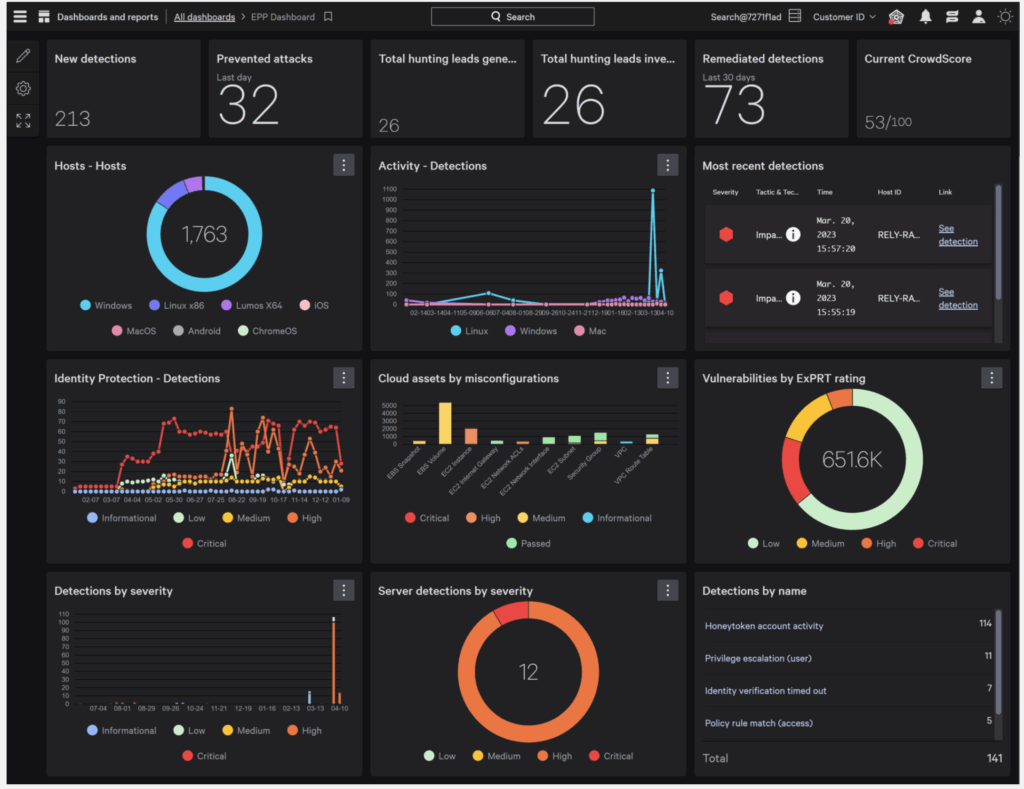
CrowdStrike Falcon is a cloud-native platform that delivers ransomware protection through AI-driven detection, live intelligence, and unified visibility across endpoints, identity, cloud, and SaaS environments. It emphasizes fast detection and automated response using a single lightweight agent and integrated threat intelligence.
NOTE: CrowdStrike is detection/response/security, not backup or workload recovery.
Key features:
- AI-native threat detection: Uses AI trained on real-world attack data to identify and stop threats quickly.
- Unified security platform: Consolidates endpoint, identity, cloud, and SaaS protection in one system.
- Real-time threat intelligence: Continuously analyzes telemetry and adversary behavior for faster detection.
- Single lightweight agent: Collects high-fidelity data across systems without requiring multiple tools.
- Automated response and investigation: Accelerates response times and supports automated security workflows.
Cons (as reported by users on G2):
- High pricing and licensing complexity: Users frequently mention that the platform is expensive, especially for smaller organizations or when additional modules are required.
- Steep learning curve for advanced features: While powerful, the platform can be difficult for new users to fully understand, particularly when working with advanced tools and configurations.
- Complex user interface and information overload: Some users find the interface cluttered, with large volumes of data that can be difficult to navigate and interpret.
- False positives in threat detection: AI-driven detection may occasionally flag legitimate processes, requiring manual review and coordination with IT teams.
- Time-consuming onboarding and integration: Initial setup, deployment, and integration with other systems can take significant time and effort.
5. CyberProof Ransomware Protection
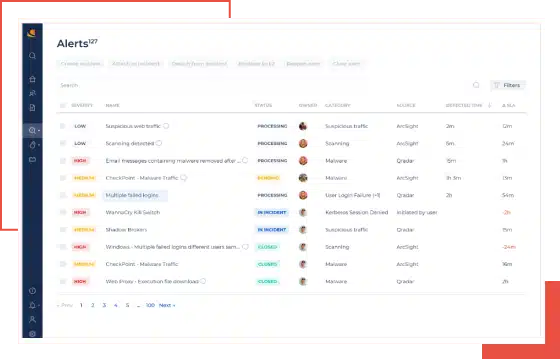
CyberProof provides ransomware protection as a managed service that combines proactive defense, continuous monitoring, and incident response. The approach focuses on integrating consulting, implementation, and ongoing operations to help organizations maintain resilience and recover quickly from attacks.
Key features:
- Managed ransomware protection service: Delivers continuous monitoring and threat mitigation through managed operations.
- Incident response and recovery services: Includes forensics, containment, and restoration support after attacks.
- Proactive threat detection and intelligence: Uses real-time intelligence and monitoring to identify threats early.
- Integrated continuity planning: Supports backup, disaster recovery, and continuity planning as part of the service.
- Compliance and regulatory alignment: Helps organizations meet security standards and reporting requirements.
Cons:
- High cost for smaller organizations: The managed services model, while comprehensive, may be prohibitively expensive for small or mid-sized businesses without large security budgets.
- Limited visibility into backend processes: Some users report that CyberProof’s platform lacks transparency into detection workflows and response actions, making it difficult to audit or verify activity without relying on service reports.
- Inconsistent report detail: Reports sometimes lack granularity needed for in-depth forensic analysis, which can be a drawback for teams seeking detailed incident context or compliance evidence.
- Onboarding complexity: Integration into existing infrastructure and workflows may require significant planning and vendor coordination, especially in hybrid environments.
- Less control over tooling: As a managed service, CyberProof may not allow full customization of detection rules or response logic, which can limit flexibility for advanced internal teams.
6. Sophos Endpoint

Sophos Endpoint protects against ransomware using AI-driven detection, behavioral analysis, and automated response capabilities. It focuses on blocking ransomware before or during encryption activity, while enabling investigation and recovery through integrated EDR/XDR tools and centralized cloud management.
Key features:
- Behavior-based ransomware protection: Monitors file activity and blocks malicious encryption processes.
- Automatic file rollback: Restores files to their original state after ransomware activity is detected.
- Remote ransomware protection: Prevents encryption attempts from compromised devices within the network.
- Integrated EDR and XDR capabilities: Enables threat hunting, investigation, and response from a single platform.
- Cloud-based centralized management: Provides visibility, alerting, and control through a unified management console.
Cons (as reported by users on G2):
- Performance slowdowns during operation: Users report slower system performance, especially during scans, updates, or on older devices.
- High resource consumption: The software can consume significant CPU and system resources, which may impact overall device responsiveness.
- Steep learning curve: New users, particularly without dedicated IT support, may find the platform difficult to learn initially.
- Complex initial configuration: Setup and policy management can be challenging, requiring time and technical expertise.
- High CPU usage on older systems: Devices with older hardware, especially those using HDDs, may experience noticeable slowdowns due to CPU load.

Related content: Read our guide to ransomware prevention
Frequently Asked Questions
What’s the difference between disaster recovery and detection-focused ransomware solutions?
Disaster recovery solutions focus on restoring clean data and infrastructure after an attack. They typically include immutable backups, cross-account storage, and orchestration tools. Detection-focused solutions emphasize early threat identification, containment, and forensic analysis. Most enterprises need both to ensure full coverage across the attack lifecycle.
Can ransomware encrypt cloud-based backups?
Yes—if the backups are stored within the same compromised environment and lack isolation. To prevent this, backups should be stored in separate accounts, regions, or clouds with strict IAM policies and object lock (immutability) enabled.
What does ‘immutable backup’ mean?
An immutable backup is a backup that cannot be changed or deleted for a specified period. It protects against ransomware by ensuring there is always a clean copy of data available for recovery, even if attackers gain elevated access.
Do I need ransomware protection if I already have endpoint detection and response (EDR)?
EDR provides critical visibility and containment capabilities, but it doesn’t replace the need for clean backups, rollback mechanisms, or disaster recovery planning. Ransomware protection is a layered effort—EDR should be part of a broader strategy that includes recovery capabilities.
How does ransomware get into enterprise networks?
Most ransomware attacks begin with phishing emails, credential theft, or exploitation of unpatched vulnerabilities. Once inside, attackers move laterally to identify and encrypt valuable data. This is why a combination of email security, patch management, and network segmentation is essential.
How often should I test my ransomware recovery plan?
Testing should occur at least quarterly, or more frequently for high-priority systems. Automated DR testing tools can validate recovery processes without disrupting production, ensuring readiness in case of an actual attack.
Are AI-based detection systems reliable against ransomware?
AI and machine learning improve the detection of previously unseen ransomware strains by analyzing behavioral patterns. However, they are not foolproof. Detection accuracy depends on tuning, threat intelligence feeds, and continuous model training. Human oversight remains important.
Is paying the ransom ever a good option?
Generally, no. Paying does not guarantee full data recovery and may violate legal or regulatory policies. Instead, invest in recovery capabilities that enable you to restore systems without needing to engage with attackers.
What compliance standards apply to ransomware protection?
Depending on the industry, organizations may need to meet requirements under GDPR, HIPAA, ISO 27001, NIST 800-53, or PCI DSS. Many ransomware protection tools provide audit trails, access logging, retention policies, and encryption to help meet these standards.
Conclusion
Enterprise ransomware protection demands a comprehensive, multi-layered strategy that addresses prevention, detection, and recovery. Effective solutions combine advanced threat analytics, strict access controls, and secure backup practices to minimize attack impact. As ransomware threats evolve, maintaining strong defenses and adapting to new attack vectors remains essential for safeguarding critical assets and ensuring operational continuity.